.png)
Homeopathic Treatment for Poison Ivy

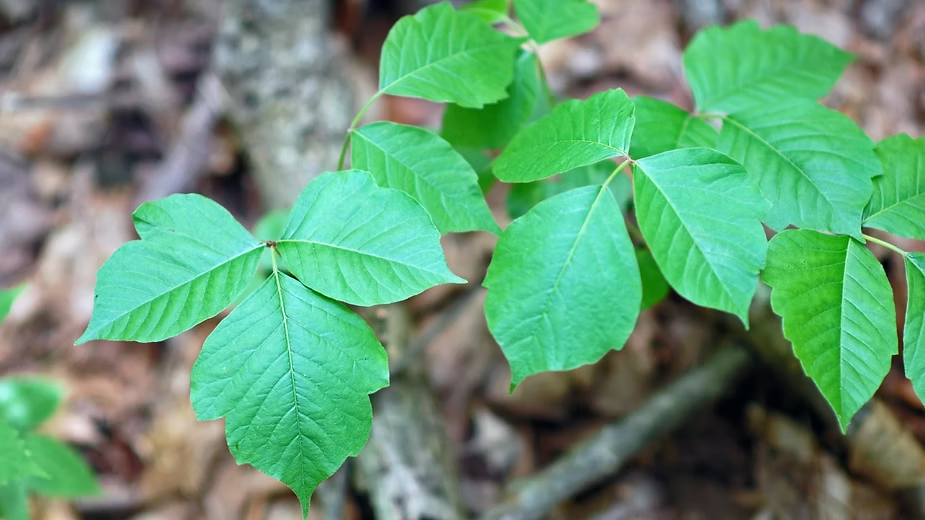
Well here we are mid-summer and gardens are in their full glory....and along with the Daisies and Petunias....we have the dreaded Poison Ivy. I'm one of the lucky ones and don't seem too bothered by a brief brush of it, but there are those out there that succumb mightily to it's poison! Toxicodendron radicans, Poison Ivy, contains urushiol, an oily resin responsible for triggering allergic contact dermatitis in susceptible individuals.
The intensely itchy rash, redness, swelling, and blistering associated with a typical bout of Poison Ivy, can be incredibly uncomfortable. And perhaps surprising to some of you, one of homeopathy's best-known remedies for skin irritation is Rhus toxicodendron, a remedy derived directly from the Poison Ivy plant. In homeopathy, the substances used to make remedies go through a specific process of serial dilution and mechanical disruption rendering them safe and potentized. The process is based on a foundational principle of homeopathy involving the similimum....or finding the remedy that is most similar to the total symptom picture of the individual.
There are three "main" remedies for Poison Ivy and although Rhus tox is the classic one, the other two, Anacardium orientale and Mezereum should also be considered and compared to the symptoms you are actually exhibiting.
Rhus toxicodendron (Rhus tox):
Intensely itchy rash with tiny fluid-filled blisters
Itching may be unbearable
May also have a burning sensation
Skin may appear bright red, swollen and inflamed
May find relief from warmth, warm bathing or heat which may bring temporary relief
Anacardium orientale (Anac or):
The skin can have a similar description as indicated for Rhus tox, but the itching often feels deeper and more persistent.
The skin can become thickened or irritated from repeated scratching and the discomfort may leave the person feeling distracted or irritable.
Mezereum (Mez):
Another important remedy in certain cases of Poison Ivy, particularly when the eruption becomes more severe or progresses beyond the blistering stage.
The skin may burn intensely while simultaneously itching, creating a incessant urge to scratch. Blisters may ooze before forming thick crusts as healing progresses. Even after the rash begins to dry, itching can remain intense.
A keynote of Mezerum is that the itching can be worse in the warmth of the bed, resulting in restless nights and interrupted sleep.
One of the greatest stengths of homeopathy is its individualized approach. Several people exposed to the same patch of Poison Ivy may develop different reactions. This is why experienced homeopaths spend time understanding not only the appearance of the rash, but also the sensations (what does it feel like?), modalities (what makes it worse or gives it some relief?), any associated changes in emotional state, and any other individualizing characteristics which all help the homeopath choose the correct remedy.
Supporting the Healing Process:
In addition to the most appropriate homeopathic remedy for poison ivy, there are also gentle supportive measures that can be taken to include in the care routine:
Keep the affected area clean.
Resist excessive scratching.
Aloe vera gel can help soothe and heal the skin and has natural anti-inflammatory properties
Black tea contains tannins that act as a natural astringent to help soothe, contract inflamed skin tissue, and dry our weeping poison ivy patches. Use moistened black tea bags directly, or make a compress from a decoction of very strong black tea and apply to affected area.
Although, common, and often readily treated at home with homeopathy and other natural modalities, it's always important to seek qualified medical care if you are pregnant, nursing, have chronic medical conditions, or are taking prescription medications. Homeopathy can be used as a complementary approach to care and can be used in combination with any qualified medical advice that you're also following.
Seek medical Care if:
The rash continues to spread over large areas of the body.
The face, eyes, mouth or genitals become affected.
There is pus or signs of infection.
Fever develops.
Any breathing difficulties are considered a medical emergency.
Disclaimer: The information provided in this Blog is for educational purposes only and is not intended as medical advice, diagnosis, or treatment. Always seek the advice of your qualified health provider regarding any medical condition or concern. Do not disregard professional medical advice or delay seeking it because of information you have wread here.
Comments